
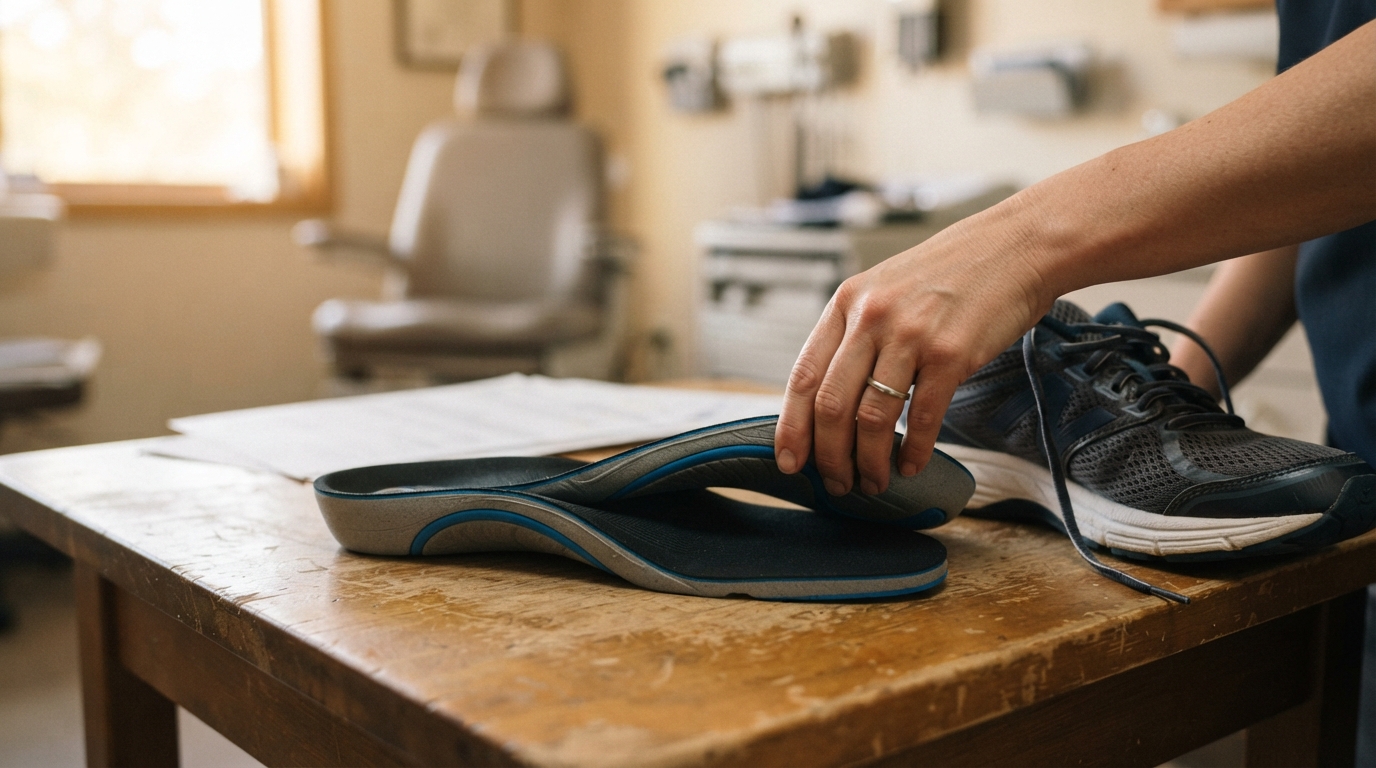
• Custom orthotics are podiatrist-fitted shoe inserts designed to correct movement problems, ease pain, and support conditions like flat feet and plantar fasciitis.
• A proper fitting starts with a clinical evaluation of gait, foot shape, and daily footwear habits, not a one-size shoe insert.
• Cypress, TX residents can access custom fitting, assessment, and follow-up care through local podiatry practices that specialize in foot and ankle conditions.
Anyone dealing with heel pain, arch discomfort, or fatigue after a normal day on their feet is usually asking the same question: will a shoe insert actually fix this, or do I need something made for my foot specifically. The short answer is that custom-fitted inserts, prescribed and adjusted by a podiatrist, tend to outperform generic drugstore versions for people with diagnosed foot conditions rather than mild, occasional discomfort.
Custom orthotics are shoe inserts built from a mold or scan of an individual foot, intended to correct alignment and distribute pressure more evenly during standing and walking. Local providers like Orthotics Cypress TX start the process with a hands-on assessment rather than a generic sizing chart, which matters because foot mechanics vary widely between patients even when symptoms look similar.
Who Actually Needs Custom Orthotics
Not every ache in the foot calls for a custom device. Orthotics tend to make the biggest difference for a specific set of conditions:
• Flat feet or high arches that cause uneven weight distribution
• Plantar fasciitis or chronic heel pain that worsens with standing or walking
• Diabetic patients who need pressure relief to prevent skin breakdown
• Post-injury recovery where gait has been altered
• Structural issues in children’s developing feet
According to the American Podiatric Medical Association, foot and ankle health should be monitored regularly, since untreated mechanical issues can compound into knee, hip, or back pain over time. That progression is part of why podiatrists recommend evaluation before assuming a store-bought insert will solve a persistent problem.
How the Custom Fitting Process Works
A typical orthotics visit follows a predictable sequence, though details vary by clinic and condition severity.
1. Clinical exam of gait, foot structure, and pressure points
2. Discussion of symptoms, footwear habits, and activity level
3. Mold, scan, or cast taken of the foot
4. Fabrication of the device based on the specific diagnosis
5. Fitting appointment with adjustments as needed
6. Follow-up to confirm comfort and effectiveness
This differs meaningfully from picking up a generic insert at a pharmacy, where there is no diagnostic step and no way to confirm the product matches the actual problem.
Custom Orthotics vs. Over-the-Counter Inserts
|
Feature |
Custom Orthotics |
Over-the-Counter Inserts |
|
Fitting process |
Based on clinical exam and foot mold |
Generic sizing, no exam |
|
Best suited for |
Diagnosed conditions, chronic pain, diabetic care |
Mild, temporary discomfort |
|
Adjustability |
Can be modified by a podiatrist |
Fixed, not adjustable |
|
Typical lifespan |
Built for long-term daily use |
Often wears down faster |
The table reflects general differences in approach rather than guaranteed outcomes, since results depend on the individual condition and how consistently the orthotic is worn.
Daily Habits That Support Orthotic Use
Getting fitted is only the first step. A few habits help orthotics perform as intended over time:
• Wear them consistently, including during the break-in period, since intermittent use can slow adjustment
• Pair them with supportive, properly fitted shoes rather than narrow or worn-out footwear
• Report any new rubbing, pinching, or pain promptly rather than waiting it out
• Schedule a follow-up if activity level, weight, or foot shape changes noticeably
Consistency matters because orthotics work by gradually retraining how weight moves across the foot during each step, and skipping days can interrupt that process.
Frequently Asked Questions
How long does it take to get used to custom orthotics? Most people need a short adjustment period, often a couple of weeks, as the foot and gait adapt to the new support pattern.
Are custom orthotics covered by insurance? Coverage varies by plan and diagnosis, so it is worth confirming benefits directly with the provider’s office before scheduling a fitting.
Can children use custom orthotics? Yes, podiatrists sometimes prescribe orthotics for children with flat feet, walking irregularities, or other developing foot structure concerns, tailored to their growth stage.
Do orthotics replace the need for other treatment? Not always. Orthotics often work alongside other care, such as physical therapy or footwear changes, depending on the underlying condition.
Foot pain that lingers past a few weeks, or discomfort that changes how someone walks, is generally worth a professional evaluation rather than continued guesswork with store-bought inserts. Local practices such as Cypress Foot & Ankle Center offer the kind of hands-on assessment that a packaged shoe insert simply cannot replicate, particularly for chronic or diagnosed conditions. Anyone in the Cypress area experiencing ongoing foot or ankle discomfort should consider scheduling an evaluation to determine whether a custom orthotic fits their specific situation.